


Experiencing hip pain when walking can make everyday activities increasingly frustrating, especially when the cause is not obvious. The discomfort may feel as though it originates directly inside the hip joint, but that is not always where the problem begins. Muscles and tendons surrounding the hip can become irritated, and problems involving the lower back or nerves can create symptoms that travel into the hip, buttock, or leg. Understanding these differences matters because effective care depends on identifying which structures are contributing to the pain.
Is the Pain Actually Coming From Your Hip Joint?
The hip is a ball-and-socket joint designed to support body weight while allowing substantial movement. Every step requires coordinated motion between the hip joint, pelvis, surrounding muscles, and spine.
Joint-related problems often produce discomfort in the groin or front of the hip, although symptoms can occur elsewhere. Pain may become more noticeable while walking, climbing stairs, getting out of a chair, or moving the leg through certain positions.
Osteoarthritis is one possible source of joint-related hip discomfort. As cartilage within the joint changes over time, people may experience stiffness, reduced range of motion, and pain with weight-bearing activities. Symptoms are not limited to older adults, however, and hip pain should not automatically be attributed to arthritis based on age alone.
Other joint-related conditions can also cause symptoms, which is why an examination is more useful than attempting to diagnose the problem based only on where it hurts.
Muscle and Tendon Problems Can Feel Like Hip Pain
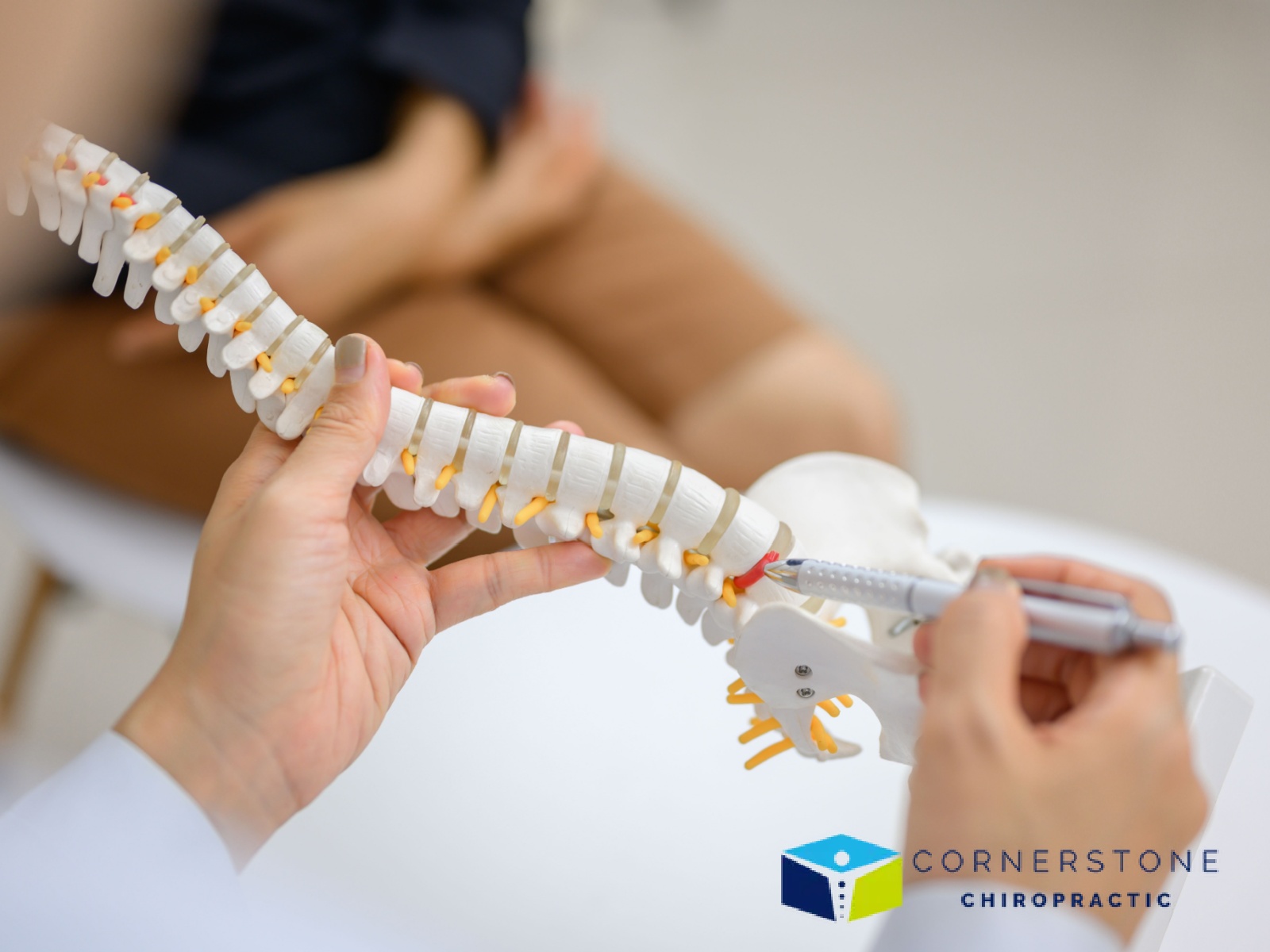
The muscles surrounding the hips stabilize the pelvis and help propel the body forward. Walking places repeated demands on the gluteal muscles, hip flexors, adductors, and other supporting tissues.
Muscle strain or overuse may cause soreness that becomes more noticeable with activity. Tendons can also become irritated, producing pain around the front, side, or back of the hip.
Pain located primarily along the outside of the hip may involve structures surrounding the greater trochanter, the prominent area of bone on the upper femur. Several soft-tissue conditions can affect this region, so labeling all outer-hip discomfort as bursitis can oversimplify the problem.
A chiropractic evaluation may include assessment of hip pain treatment to determine how muscle function, joint mobility, and movement patterns may be contributing to symptoms.
Sometimes Hip Pain Starts in the Lower Back
One of the most important distinctions involves determining whether the painful area is actually the source of the problem. Nerves originating in the lower spine travel through the pelvis and into the legs. Irritation involving these structures can sometimes produce symptoms that are perceived around the hip.
Spinal problems may cause discomfort in the buttock, outer hip, thigh, or lower leg. Depending on the structure involved, symptoms may include burning, tingling, numbness, weakness, or pain that changes with certain spinal positions.
This is one reason evaluating lower back pain can be relevant even when a patient’s primary complaint involves the hip. Examining how the lumbar spine and pelvis move can provide information that focusing exclusively on the painful area might miss.
Joint, Muscle, or Spine: What Are the Differences?
Symptoms can overlap, so location alone cannot provide a definitive diagnosis. Certain patterns, however, can offer useful clues.
Joint-related hip problems may produce groin discomfort, stiffness, reduced range of motion, or pain during weight-bearing movement. Soft-tissue problems may be more localized and can become noticeable when a specific muscle is contracted, stretched, or repeatedly used.
Spinal or nerve-related symptoms may travel farther from the original source. A person might describe pain extending through the buttock or thigh or notice numbness and tingling.
These patterns help guide an examination, but they should not replace one. Several problems can exist simultaneously. For example, altered hip movement can place additional demands on surrounding muscles or affect how the pelvis and lower back move during walking.
Why Walking Can Reveal a Problem
Walking is a repetitive movement that requires the body to transfer weight from one leg to the other. The pelvis must remain sufficiently stable while the hips, knees, ankles, and spine coordinate movement.
A restriction or weakness that is barely noticeable while sitting may become much more apparent after hundreds or thousands of steps.
Stride length, pelvic rotation, hip mobility, muscle strength, and spinal mechanics can all influence walking. When one area is not functioning normally, another region may compensate. Those compensations can eventually contribute to discomfort.
Our chiropractic care considers these relationships when evaluating musculoskeletal pain rather than viewing each painful area as completely independent.
What to Expect During a Chiropractic Evaluation
Before recommending treatment, we need to understand the characteristics of the pain. When did it begin? Is it located in the groin, outer hip, buttock, or thigh? Does it occur immediately when walking or only after several minutes? Does sitting relieve it? Are numbness, tingling, weakness, or lower-back symptoms present?
A physical examination may evaluate hip and spinal range of motion, muscle strength, posture, joint mobility, neurological function, and movement patterns. Orthopedic testing may help narrow down which structures warrant closer attention.
Imaging is not automatically necessary for every case. When examination findings or the patient’s history indicate that additional investigation is appropriate, imaging or referral to another healthcare provider may be recommended.
Frequently Asked Questions
How can I tell if hip pain is coming from my joint or my back?
Hip-joint problems often cause groin or front-of-hip discomfort and reduced range of motion, while spinal problems may cause pain in the buttock, outer hip, or leg. Numbness, tingling, or radiating symptoms can suggest nerve involvement. Because symptoms overlap, a professional examination is needed to determine the likely source.
Why does my hip hurt only when I walk?
Walking repeatedly loads the hip while requiring coordinated movement of the pelvis, muscles, and lower spine. Joint irritation, muscle or tendon problems, altered movement patterns, and certain spinal conditions can therefore become more noticeable during walking than while resting.
Can lower-back problems cause hip pain?
Yes. Problems involving the lumbar spine or nearby nerves can sometimes produce pain that is felt around the buttock, hip, or thigh. An examination can help determine whether symptoms originate in the hip itself, the spine, or multiple areas.
Can a chiropractor help with hip pain when walking?
Chiropractic care may be appropriate when musculoskeletal or mechanical factors involving the hip, pelvis, or spine contribute to symptoms. Treatment depends on examination findings, and patients may be referred for other medical care when their condition requires it.
How Chiropractic Care May Help
Treatment depends on what the evaluation reveals. When joint restrictions or mechanical problems involving the spine or pelvis are contributing factors, chiropractic adjustments may be incorporated into an individualized treatment plan.
Care may also address surrounding soft tissues and movement patterns. The objective is not simply to make the painful area feel better temporarily. Treatment should address relevant mechanical factors and help improve comfortable function when possible.
Not every cause of hip pain is appropriately treated with chiropractic care alone. Significant joint degeneration, fractures, certain neurological problems, systemic illness, and other medical conditions may require different or collaborative care. Recognizing when referral is appropriate is an important part of evaluating hip symptoms responsibly.
When Should You Have Hip Pain Checked?
A brief episode of soreness after an unusually strenuous activity may improve with time. Pain that repeatedly appears during normal walking deserves more attention.
Schedule an evaluation when discomfort persists, progressively worsens, limits walking distance, changes your gait, or repeatedly causes you to avoid normal activities. Pain accompanied by lower-back symptoms, numbness, tingling, or weakness should also be evaluated.
Sudden severe pain following trauma, inability to bear weight, substantial swelling, fever, unexplained illness, or rapidly developing neurological symptoms can require prompt medical attention.
Seeking an evaluation before symptoms become severe may also prevent months of trial-and-error spending on products or treatments that do not address the actual source.
Find Out What Is Causing the Pain Before Treating It
The most useful question is not simply, “How do I make my hip stop hurting?” It is, “Which structure is causing my symptoms?”
Joint problems, irritated muscles or tendons, spinal dysfunction, and nerve involvement can produce overlapping symptoms. Treating all hip discomfort the same way can therefore miss an important part of the problem.
Cornerstone Chiropractic takes an examination-based approach designed to identify relevant musculoskeletal factors before recommending care. If hip pain when walking keeps returning, changes the way you move, or is making everyday activities uncomfortable, schedule an evaluation with Cornerstone Chiropractic in Washington. Call Cornerstone Chiropractic at (425) 689-7767 to have your symptoms evaluated and determine what type of care may be appropriate.